


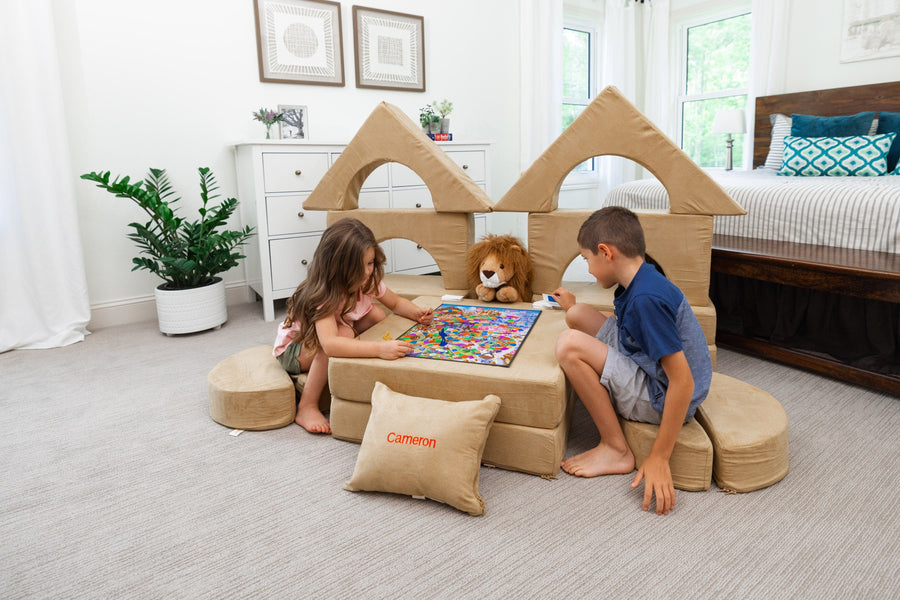


Indoor playground ideas for toddlers can start with a clear patch of floor, a few soft foam pieces and a blanket or two. Set up small zones for climbing, crawling, pretend play and quiet reading. Match them to your toddler's age, and change the layout often so the space keeps feeling new.
Some of the sweetest moments at home happen on ordinary afternoons. A snowy morning when the park is out of the question. A long stretch of winter break. That hour before dinner when your toddler still has a whole day's worth of energy left to spend.
An indoor playground does not have to mean turning a room into a jungle gym. The spaces toddlers love most are often the simplest ones: a soft spot to climb, somewhere to crawl through, a corner for pretend play and a cozy nook for stories. Here is how to set one up, what to include at each age, and how to keep it feeling fresh all season long.
Why an indoor play space is worth it
Toddlers are made to move. They climb onto cushions, crawl under tables, stack pillows into towers and turn blankets into castles without anyone suggesting it. A dedicated play area simply gives that energy a safe, welcoming place to go.
A good setup supports far more than burning off steam. Climbing, crawling and balancing help toddlers build coordination and a sense of where their body is in space. Building and rebuilding gives them small problems to solve. And a space designed for play makes it easy for you to join in, whether that means crawling through a tunnel together or cheering from the sidelines of a homemade obstacle course.
Start with a soft, safe base

The easiest place to begin is with something soft and sturdy that can change shape as often as your toddler's ideas do. Modular foam pieces work well here, because the same set can be a climbing course in the morning, a reading nook after lunch and a fort for family movie night.
That is exactly how our castles are designed. The Original Play Castle Sofa comes with 14 buildable foam pieces plus a personalizable pillow. The FoamOh Super Castle Play Sofa adds a Triangle Ramp, a Steps piece and a Circle, for 17 buildable pieces plus a pillow. Both use furniture-grade, CertiPUR-US® certified foam made without flame-retardant chemicals, and both have removable covers you can put in the washing machine. They are designed for ages 1 and up, for climbing, building and imaginative play. Not for sleeping. Always supervise children during play.
Every build asks your child to think, test and try again. Will this tower stand? Does this ramp need to be steeper? What happens if the tunnel gets longer? Those small experiments are how toddlers start to understand shape, balance and cause and effect. If you want to know more about how this kind of play works, our guide to modular play goes into more detail.
Indoor activities for kids: 5 play zones to set up at home
You do not need all five at once. Pick one or two to start, and add more as your child's interests grow.
1. A mini obstacle course
Toddlers love movement with a purpose, and an obstacle course they can run again and again is one of the most reliable indoor activities for kids. Use soft pieces to create:
-
A small climb up
-
A tunnel to crawl through
-
A low jump-down spot
-
Stepping stones
-
A balance path along a line of flat pieces
Change one or two stations every few days and yesterday's castle becomes today's mountain path. Obstacle courses help toddlers practice balance, coordination and remembering steps in order, and because the course keeps changing, it rarely feels repetitive.
2. An imagination corner
Some of the best indoor play spaces have no fancy equipment at all. A couple of foam pieces and a blanket become whatever your child needs them to be that day:
-
A castle with invisible dragons circling outside
-
A pirate ship sailing to treasure island
-
A rocket headed for the moon
-
A shop where everything costs one hug
-
A little house where stuffed animals come for tea
This is where pretend play blossoms. Children narrate their stories, try out different roles and invite you into worlds they built themselves. Parents often tell us these are the moments they remember most: the silly stories, the made-up games, and the "come inside my castle, Mom!" invitations.
3. A movement station
For high-energy days, especially the long ones in the middle of winter, set aside one spot for:
-
Dancing and spinning
-
Jumping and rolling onto soft landings
-
Crawling challenges
-
Climbing up and sliding down
A study published in BMC Public Health found that preschoolers with more opportunities for active play at home tended to be more physically active overall. When toddlers climb, crawl and balance, they are building strength, practicing how to plan their movements, and gaining confidence in what their bodies can do.
4. A tunnel zone
Tunnels are endlessly fascinating to toddlers. Line up arches or prop pieces against each other to make a crawl-through, then drape a blanket over the top for a darker, cozier version. Crawling through tight spaces helps little ones figure out how their body fits and moves, and there is something wonderful about the giggle that comes out the other end.
5. A wind-down corner
The best indoor playgrounds also double as calm spaces. After all that climbing and castle-building, toddlers need a gentle landing, and the same pieces can create one.
-
Arrange pieces into a low reading nest and tuck the pillow inside
-
Drape a favorite blanket over the top as a soft roof
-
Add two or three board books and a favorite stuffed animal
-
Soften the lights and put on quiet music
The fort that held dragons an hour ago now feels safe and cozy. Moving from active play to quiet reading time in the same familiar spot can help some toddlers settle, and many families find their child starts heading to the reading nest on their own.
Indoor playground setups by age
Watching your toddler grow into their own play style never gets old. These setups use the same pieces in new ways as your child grows. The space suggestions are rough starting points, so measure your room and adjust.
| Age | Play zone | Suggested floor space | What to build | Skills it supports |
|---|---|---|---|---|
| 1 to 2 years | The early explorer | About 4 × 4 ft | Low pieces to crawl over, one low edge to pull up on, a gentle climb | Crawling, pulling up, early climbing and balance |
| 2 to 3 years | The adventure course | About 6 × 6 ft | A small mountain to climb, a tunnel, a balance path and a low jump-down spot | Coordination, confidence, following a sequence |
| 3 to 5 years | The imagination kingdom | About 8 × 6 ft | A castle fort, pirate ship or rocket, plus a cozy nook for stories | Pretend play, storytelling, problem-solving |
| 5 years and up | The big builder HQ | As much as the room allows | Multi-room forts, longer obstacle courses, slides using a ramp | Planning, teamwork, bigger physical challenges |
Space suggestions are rough starting points, so measure your room and adjust. FoamOh castles are designed for ages 1 and up. Not for sleeping. Always supervise children during play.
Build the starting point together, then step back. Your child will tweak it, rename it and claim it as their own kingdom, which is exactly the point.
What pretend play does for young children
Pretend play can look like pure fun, and it is. It also does real work. Psychology Today describes imaginative play as a safe way for young children to act out feelings and experiences through stories and characters. The American Academy of Pediatrics report The Power of Play links play with social and emotional skills and with helping children cope with stress.
In your imagination corner, that might look like your child:
-
Acting out a feeling they do not have words for yet
-
Replaying something new or confusing, like a doctor's visit
-
Trying on different roles, from the brave knight to the baby dragon
-
Practicing empathy by pretending to be someone else
So when your toddler says, "Come inside my castle," they are inviting you into how they see the world right now, using the language they know best.
Make it a family space, not just a kids' space
The best indoor play setups are not only about keeping toddlers busy while you get something else done, though that is a welcome bonus. They also give you moments to share: reading together inside a blanket fort, crawling through a tunnel side by side, or helping stack pieces into a tower taller than yesterday's and watching their face light up when it stays standing.
A toddler might start by building a wall, and within minutes you are helping turn it into a castle. What begins as play turns into talking, laughing and inventing worlds together. On long winter days, that kind of shared play is one of the easiest ways to reconnect as a family.
A few safety basics
-
Set up the play area on a flat surface, away from windows, hard furniture edges and anything that could tip over.
-
Use a rug or mat that does not slide around.
-
Keep builds low for younger children, and let height grow with their skills.
-
Use the pieces for play, not for sleeping.
-
Stay close by. Always supervise children during active play.
Creating a space they keep coming back to

The best indoor playground ideas for toddlers are rarely the most complicated ones. They are the spaces that feel inviting, change easily and leave room for your child's imagination. A few soft pieces, room to move and a cozy spot for quiet moments can turn an ordinary corner into the place where your toddler spends the winter building, climbing, pretending and curling up with you for a story.
Need a little inspiration to get started? Browse real family builds and download free guides on our castle builds page, or compare both castles in the castles collection.
Frequently asked questions
How much space do I need for an indoor playground at home?
You can start with an area about the size of a play rug, roughly 4 × 4 feet for younger toddlers and around 6 × 6 feet for obstacle courses. Leave a clear border around the play area, away from furniture edges and windows. Corners work well in smaller rooms, and FoamOh castle pieces stack back into a sofa shape when playtime is over.
What are good indoor activities for kids on cold or rainy days?
Obstacle courses, fort building, tunnel crawling, dance parties and pretend play all work well indoors. Soft foam pieces make it easy to switch between them, so the same setup can be a climbing course in the morning and a reading nook in the afternoon. Changing the layout every few days keeps things feeling new through the whole season.
What if my toddler ignores the play space?
Start with one inviting build, like a tunnel or a small mountain, and play in it yourself for a few minutes. Toddlers love to copy what their grown-ups are doing. Keep screens away from the play area, keep just a few toys out, and give it a few days. Most children find their way over on their own.
How do I store everything without the house feeling cluttered?
Keep the main pieces in the play zone so they are ready to use, and stack them into a sofa shape when you want the room back. Smaller toys can live in one or two baskets or clear bins with picture labels, which toddlers can use without help. Rotating a few items each week also keeps the clutter down.
Can I use household items instead of buying new equipment?
Yes. Couch cushions make stepping stones, cardboard boxes become tunnels, and a strip of painter's tape on the floor is a perfect balance beam. Many families start with what they have and add sturdier, washable pieces once they see how much their toddler uses the space.
How often should I change the setup?
Every few days is a good rhythm, but follow your child's lead. If they are still happily playing in yesterday's castle, there is no need to change it. When interest starts to fade, rearrange a few pieces or turn the build into something new, like a mountain, a train or a reading nest.
What age is right for indoor obstacle courses?
From around age 1, toddlers can enjoy low, simple paths to crawl along and climb over, with close supervision. From about age 2, most are ready for courses with a small climb and a tunnel. By three, many children can handle longer courses with more steps, and older kids love designing their own. FoamOh castles are designed for ages 1 and up, and are not for sleeping.
How do I help an active toddler wind down?
Give a gentle heads-up, like "Three more climbs, then story time in the fort." Then move into a quiet corner in the same play space, with a blanket, a few books and softer lighting. Using the same familiar spot for active play and calm play can make the switch feel easier.
Is soft play furniture worth the investment?
If your child will use it most days, it often is. Look for durable, certified foam, washable covers and pieces that can be rearranged in many ways, so the set keeps working as your child grows. Thinking about cost per year of use, rather than the price tag alone, can help you compare options.
Is an indoor play setup a good holiday gift?
It can be one of the most-used gifts under the tree, especially during the winter months when kids spend more time inside. Choose something that suits your child's age now and can grow with them. A personal touch, like a pillow with their name on it, makes it feel like it truly belongs to them.
Want to spark even more creative play at home?
Read our guide to the best toddler couch for imaginative play →